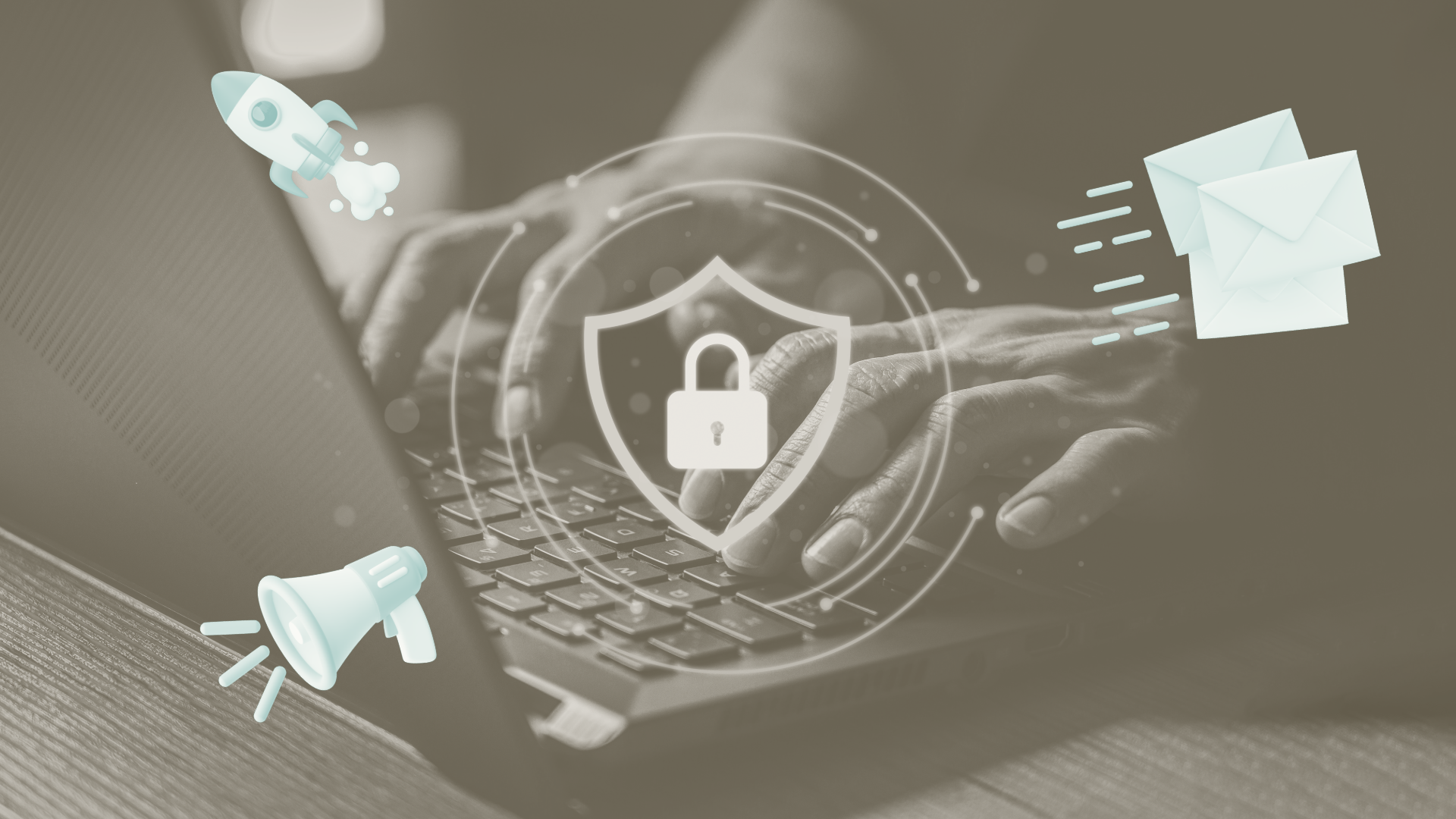
The internet is a busy place. There is a lot of fun in creating an effective Digital Marketing campaign - writing the blog posts, producing the videos, recording the podcasts. There's also that buzz when you see the reports showing user engagement and converting into subscribers or customers. But rarely is there any thought given to the cybersecurity aspect. Are you collecting personal data legally? Are you storing and handling it correctly? Digital marketing and Cybersecurity should go hand in hand, and here's why.
Creativity and Security are very different disciplines. Creativity flourishes in the absence of rules. The fewer the boundaries, the greater the originality. Security on the other hand depends on rules. It's about defining what is and what isn't allowed. Sure, you can be creative in how you apply security - but the end result always is always rules based. The more rules applied, the stronger the protection. However, the more rules applied - the more creativity is stifled in other departments. Naturally, this creates conflictions.
Marketing has its own rules too. Different strategies work better depending on the sector, season, audience, or medium. For example, a B2B lead gen strategy will be very different to a B2C strategy. Yet at its heart, marketing thrives on creativity. It relies on the imagination of writers, designers, and strategists who know how to connect with people and inspire action. But, marketing also depends on security.
Historically, a marketer’s job was done when a customer picked up the phone or made a purchase. But in the digital age, that’s only a step. Marketers now collect and retain personally identifiable data for remarketing, customer service, and ongoing engagement. And that’s where the security aspect begins.
I've worked in technology since 2008 and I have the role of IT evolve dramatically. It's no longer about the IT personnel who comes and fixes your desktop when it starts making a funny noise, or works on the email server overnight because the hard drive failed. Modern IT is about empoweringusers with the services and the data they need, from any device, wherever they are.
SMEs are no longer tied down to expensive to run, complex to manage on-site client / server models. Everything lives in the cloud. Businesses can pick and choose the services they need and pay for them in the same way we pay for the water in our pipes or the electricity in our cables. In summary, data has become a necessary utility.
IT, like security, is a rules-based service. You can be inventive with solutions (and I’ve seen some incredibly creative workarounds in my time, trust me on that), but ultimately, it’s about control: “Sales can do this, Managers can do that.”
While IT plays a vital role in cybersecurity, it isn’t responsible for understanding how marketing works, in the same way as marketing isn’t responsible for understanding the intricacies of IT. Yet this disconnect often causes friction.
IT departments sometimes see marketing as a risk - people with too much access, handling too much data. Marketers, meanwhile, often see IT and security as roadblocks that slow creativity. But when something goes wrong, be it a data breach, a hacked social account, or a GDPR complaint, all of a sudden, both sides care very much.
But who is going to take that responsibility?
Digital Marketing means that Sales, Marketing and IT must now work closer than ever before. Companies have a responsibility to ensure that personally identifiable and sensitive data is collected with consent, handled correctly, and stored securely. For all of that to happen, you need a collaborative technical and human approach.
If there is anything that I have learnt in my experience in both roles, it is explaining why we have to have processes and rules in the collection and handling of data. Some examples include:
Cybersecurity is no longer about firewalls and antivirus software - it's about awareness, authentication and compliance.
When marketing and IT teams work together to build secure, compliant, and transparent systems, they don’t just prevent breaches - they strengthen the brand itself.
In today’s digital landscape, creativity and security aren’t opposites. They’re partners. And the future of successful digital marketing depends on that partnership.